
Balancing
Looking back to look forward

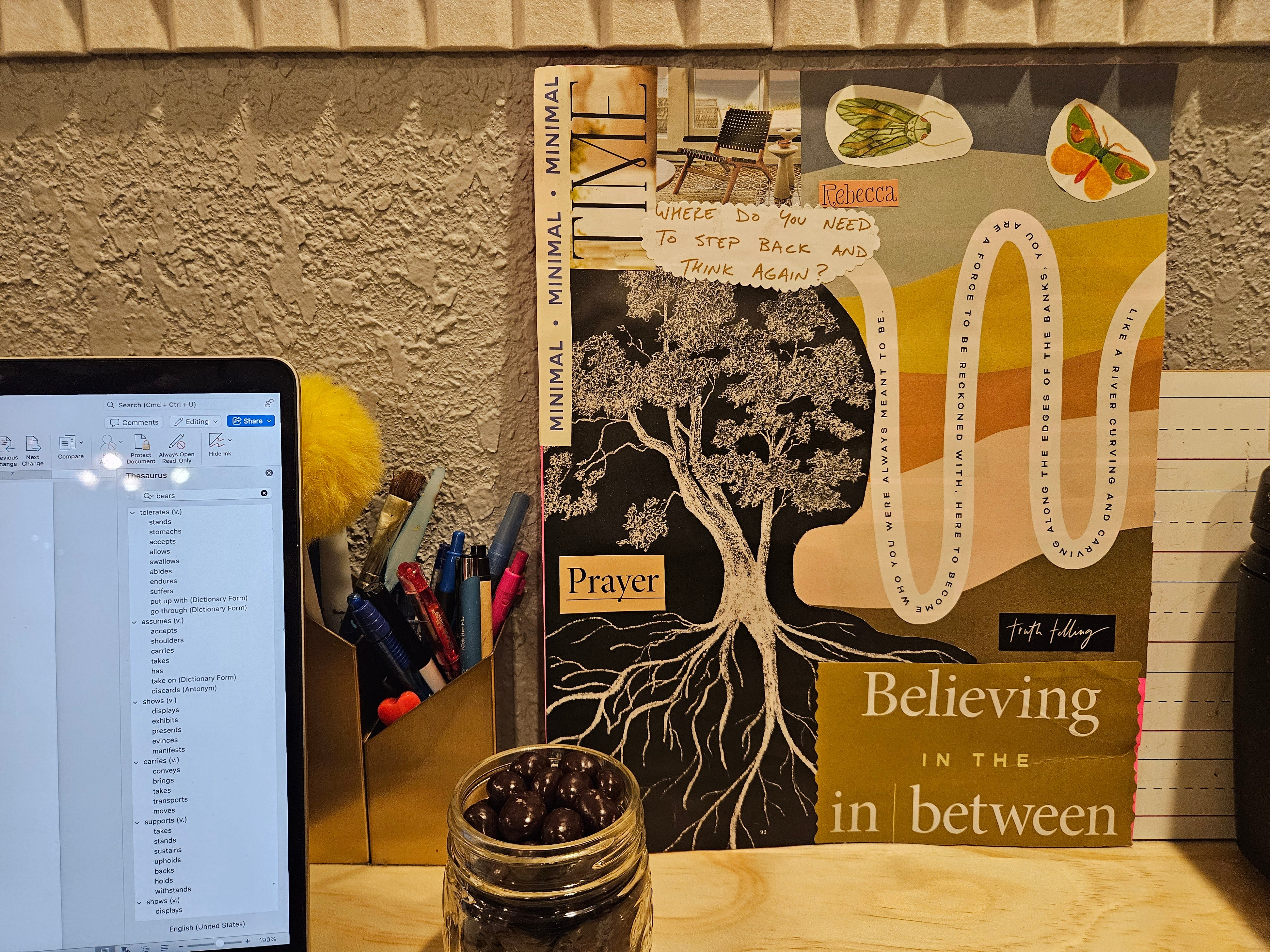
I got a new desk, and in organizing to set up the new one, I unearthed this collage I made on a snow day two years ago. It’s perfect for January and still aligns with my MO in the world.
This time of year, I revisit the last year’s goals and accomplishments. I balance the books. I begin thinking ahead.
Having just finished my fourth year of freelancing, I am decently good at planning what I will work on each year. Mostly, I’m refreshing a list of story ideas—turning brainstorming into a prioritization of what I think will rise to the top. Sometimes I settle on pursuits based on ideals, and sometimes it’s financial need. Usually, it’s a bit of both.
The process is also always an accounting of both time and money.
First, I inventory what I know. I list contracts I already have secured or agreements I have with regular clients and estimate time and earnings. As I work throughout the year, I track how much time I spend on each project, so I calculate how much time these known projects will take and how much I’ll earn.
Before I choose what else I will do in the new year’s work hours, I consider what my hourly take-home rate was the year before and weigh whether the same amount will meet needs or financial goals for the coming year. I always set tiered budget goals—the lowest one for simply meeting basic needs versus a reach goal of earning more to contribute to savings.
I only have choices over what I am not yet committed to—granted, the security of my base clients is what gives me those choices. So, my next step is figuring out which projects I should do in the new year—I usually already have a pretty good idea of what I want to do. These are often driven by what I started but didn’t finish yet or what I really feel passionate about. The key here is deciding whether the time investment will actually pay off for me or if I’m being too idealistic.
So, I figure out what time I have left and how much I need to make based on my budgeted expenses. I consider how I can work faster or more efficiently in the coming year. Or I notice which clients end up paying more for my work. Note: If clients pay less, it sometimes is still worth it to work for them for other values, such as a strong editing or reliable processes, access to a certain audience, quick turnaround times, or simply a good match for the subjects I feel strongly about writing. However, I do also select higher paying clients when I can, aiming high as a rule of thumb when it comes to pitching new publications—this doesn’t always mean legacy outlets, as some niche publications do have sufficient funding.
This year, I paid close attention to the actual number of hours I want to work and “gave” myself paid holidays and no school days, as well as vacation (which I’ve already done). This is merely a shift in framing, not practice. The nice thing is: the match actually mathed to my satisfaction (which is the opposite of what my son likes to say “the math isn’t mathing.”)
In the past, I’ve felt mixed about working part-time, really, and still being the primary laborer of household and family duties. I am the one who runs kids to most of the appointments, walks the dog, does the grocery shopping, and plans and cooks the most meals from scratch (because I like it!). I’ve struggled to keep home and work separate—feeling pressure to work on no school days or find work opportunities while on vacation—mostly because I was trying to launch a viable business. But as this little business has grown—make no mistake, it’s still just a modest income at this point—it’s getting easier to set those clear boundaries and call them “benefits.” I don’t make a ton of money, but, yes, I have earned the days off and the right to focus on other aspects of life.
Finding balance is both a matter of calculating hard numbers and ensuring tangible needs will be met and moving the pieces of my schedule together in a way that feels realistic for the rest of my life. I always value the time I have to do this reflection, as I think it’s so important in making good decisions and producing quality work. Here’s to hoping that me peeling back the curtain on my own process will inspire or inform your own inventory and goal setting process this season.
Here are some of my top writings in 2025:
“Cultivating Home” was one of my first posts on Substack and actually my most popular. It seemed a little crazy when I wrote about the unease I feel about recent immigration actions, but now it feels even more on the nose. Check it out if you have only recently joined as a subscriber.
We got a new pope in 2025—here’s my take in Atmos on where he might land on contributing to climate justice.
Some climate comm tips for Catholics are pretty applicable for pretty much anyone trying to talk people toward taking action.
I also launched a series called “Formation in Place.” The last one, “Ebb and Flow,” published in October was most popular but please start at the beginning with “Meaning in the Mud.”